Choosing a Cleanroom Sandwich Panel is not simply a matter of selecting the lowest quotation. The core affects the panel’s thermal conductivity, acoustic insulation, fire resistance, cleanability, weight, and service life. For buyers comparing the best core for cleanroom wall panels, a fire-rated cleanroom sandwich panel core, or aluminum honeycomb vs PIR insulation, the decisive engineering terms are lambda value, compressive strength, and reaction-to-fire classification. This guide compares Rockwool, aluminum honeycomb, and PIR in realistic cleanroom, laboratory, pharmaceutical, food-processing, and industrial applications.
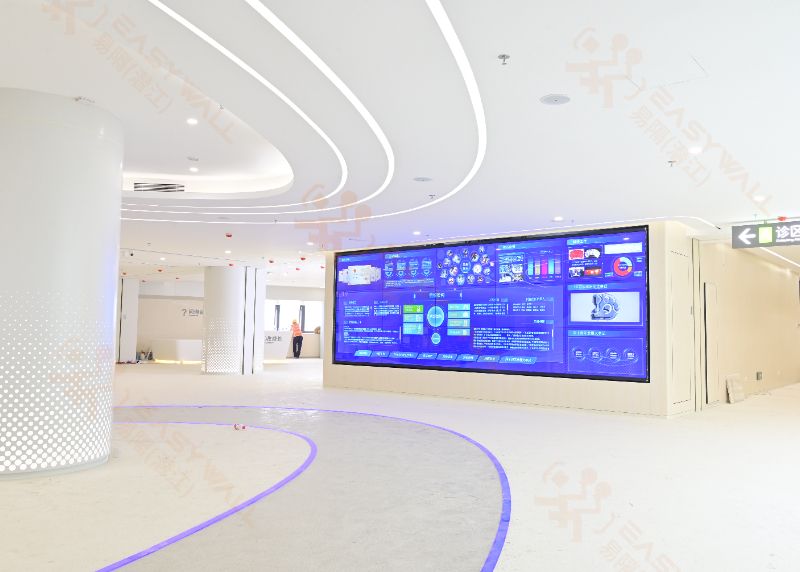
A cleanroom wall panel normally consists of two coated steel or aluminum skins bonded to an insulated core. The visible metal surface provides the hygienic, washable finish, while the core determines much of the panel’s structural and environmental behavior.
Users commonly ask:
There is no universal winner. Rockwool is usually selected for fire safety and acoustic control. Aluminum honeycomb is selected where low weight, dimensional stability, and a clean non-fibrous construction are priorities. PIR is often selected for thermal efficiency and competitive installed cost, provided its fire classification and project risk profile are acceptable.
| Performance factor | Rockwool core | Aluminum honeycomb core | PIR core |
|---|---|---|---|
| Typical density | Approximately 80–150 kg/m³, depending on grade and orientation | Approximately 30–80 kg/m³ for the honeycomb core; complete panel weight depends heavily on skins | Approximately 35–45 kg/m³ |
| Thermal conductivity, λ | Approximately 0.035–0.045 W/m·K | Core material may be low mass, but effective thermal performance is often limited by cell walls, skins, joints, and thermal bridges; verify the tested U-value | Approximately 0.022–0.028 W/m·K |
| Fire behavior | Mineral wool is generally non-combustible; exact EN 13501-1 classification depends on binders, facings, adhesive, and panel construction | Aluminum is non-combustible, but adhesive, coating, and joint materials affect the complete panel classification | Organic foam; classification varies significantly by formulation, facing, thickness, and test assembly |
| Acoustic insulation | Usually the strongest option because the fibrous structure dissipates sound energy | Usually weaker unless combined with perforated skins, acoustic layers, or a dedicated sound-control design | Moderate; normally selected for thermal rather than acoustic performance |
| Moisture sensitivity | Must be protected by continuous, sealed facings and correctly detailed joints | Aluminum is corrosion-resistant, but trapped moisture and galvanic contact still require design control | Low water absorption in closed-cell products, but cut edges, joints, and condensation must be sealed |
| Impact and handling | Good when paired with adequately thick steel skins; the core itself is not the main impact layer | High stiffness-to-weight ratio and good dimensional stability; skin thickness controls dent resistance | Good panel stiffness at low weight, but local crushing can occur under concentrated impact |
| Typical cleanroom use | Pharmaceutical production, hospitals, laboratories, fire-compartment walls, and acoustically sensitive rooms | High-spec laboratories, electronics, aerospace, ceiling systems, and projects with strict weight limits | Temperature-controlled rooms, food processing, warehouses, and projects where energy efficiency is a major concern |
Values are indicative ranges, not certification claims. Always request the complete panel’s tested U-value, fire report, smoke data, structural span, impact result, and hygienic-surface documentation.
Rockwool is manufactured from mineral fibers formed from basalt and other mineral raw materials. Its main engineering advantage is its reaction to fire. Many mineral-wool products are classified as A1 or A2-s1,d0 under EN 13501-1, but the classification belongs to the tested product assembly rather than to the raw wool alone.
The fibrous structure also absorbs airborne sound. In a laboratory, pharmaceutical plant, or hospital where compressors, air-handling units, and production equipment create continuous background noise, Rockwool can reduce reverberation and improve speech comfort. The final acoustic rating depends on the complete wall, including panel joints, doors, penetrations, and ceiling interfaces.
Rockwool is usually the most defensible choice when the project specification places fire compartmentation, non-combustibility, or acoustic performance above minimum panel weight and lowest first cost.
Aluminum honeycomb uses thin aluminum cell walls arranged in a hexagonal pattern. The geometry places material away from the neutral axis, producing a high stiffness-to-weight ratio. This makes honeycomb panels attractive for large wall modules, suspended ceiling systems, aircraft-related facilities, and areas where installers must move panels through restricted access routes.
Compared with a solid aluminum sheet, the honeycomb core can reduce weight substantially while maintaining panel flatness. However, the core’s performance should not be judged by density alone. Cell size, foil thickness, adhesive coverage, skin thickness, panel span, edge reinforcement, and fixing method all affect bending stiffness and local load capacity.
Aluminum conducts heat far more readily than mineral wool or PIR. Although the honeycomb contains air cells, the effective thermal transmittance of a completed panel is influenced by aluminum cell walls, metal skins, perimeter frames, fasteners, and panel joints. A supplier should therefore provide a tested or calculated U-value rather than quoting only the core material’s nominal conductivity.
Fire performance also needs a complete-system review. Aluminum itself does not burn in the same way as an organic foam, but adhesives, coatings, sealants, gaskets, and composite facings can change the result. For a regulated facility, ask for the classification of the exact panel construction, not a generic statement that “aluminum is fireproof.”
PIR, or polyisocyanurate, is a closed-cell rigid foam. With a typical lambda value of approximately 0.022–0.028 W/m·K, it can achieve a lower U-value than Rockwool at the same thickness. For a temperature-controlled room, that may reduce heat transfer through the envelope and help HVAC equipment maintain the set point.
For example, a simplified resistance calculation for a 100 mm core gives:
These figures exclude surface resistances, skins, joints, frames, penetrations, and thermal bridges. They illustrate the insulation advantage but should not be presented as the final wall U-value.
PIR is not automatically equivalent to a non-combustible core. Formulation, facer type, thickness, joint geometry, and test method influence flame spread, smoke production, and fire resistance. Some PIR panels achieve strong fire classifications, while others are suitable only for lower-risk applications. Request EN 13501-1, ASTM E84, FM, or other project-required reports as applicable.
PIR can be a strong choice where energy consumption, refrigeration load, and panel weight are important. It is less suitable when the specification requires a mineral, non-combustible core or when the authority having jurisdiction places strict limits on organic insulation in internal partitions.
| Project scenario | Usually preferred core | Reason | Important checks |
|---|---|---|---|
| Pharmaceutical manufacturing with strict fire compartmentation | Rockwool | Strong non-combustibility potential and good acoustic control | Complete panel fire report, cleanroom surface, joint seal, and fiber containment |
| Electronics or semiconductor laboratory with low structural loading | Aluminum honeycomb | Low weight, flatness, and high stiffness-to-weight ratio | Particle-control detailing, electrical continuity, thermal performance, and impact resistance |
| Cold room or temperature-controlled food-processing area | PIR | Low lambda value and efficient thermal envelope | Condensation analysis, food-safe coating, joint vapor seal, and fire classification |
| Hospital isolation or laboratory with equipment noise | Rockwool | Better potential for airborne sound absorption and fire performance | Acoustic test data for the complete wall and sealed service penetrations |
| Large modular cleanroom with difficult access routes | Aluminum honeycomb or PIR | Lower handling weight than many Rockwool constructions | Panel deflection, lifting points, corner reinforcement, and maintenance damage |
| Budget-sensitive industrial cleanroom | PIR or Rockwool, depending on fire requirements | Both are widely available and can offer competitive supply chains | Compare installed cost, not only the quoted price per square meter |
The following field notes are anonymized project examples used to explain typical decision patterns. Exact outcomes vary with panel thickness, manufacturer, installation quality, and local regulations.
A pharmaceutical facility expansion initially compared PIR and Rockwool because the PIR quotation was lower and the thermal calculation was attractive. During design review, the fire consultant required a tested internal partition assembly with a documented reaction-to-fire classification and specified fire-resistance period. The project team selected a Rockwool metal cleanroom wall panel after reviewing the complete test report, joint details, and service-penetration design.
The project manager’s practical observation was that the heavier panels required more installers and better temporary support, but the fire approval process was more straightforward. The lesson was not that Rockwool is always superior; it was that the approval pathway and fire evidence outweighed a modest difference in thermal performance.
In a chilled food-processing project, the owner focused on maintaining a stable internal temperature while limiting refrigeration demand. PIR panels were selected because a 100–120 mm construction could provide a lower calculated U-value than a comparable Rockwool panel. The installer emphasized that the result depended on continuous joint seals, protected cut edges, and correctly fitted cam-lock connections.
After commissioning, the facility team reported that air leakage at doors and penetrations was a more visible source of temperature fluctuation than the nominal difference between two core materials. This is a common operational lesson: a high-performance core cannot compensate for poorly sealed joints or uncontrolled door openings.
An electronics laboratory had restricted access and a ceiling system with limited allowable dead load. The design team chose aluminum honeycomb for selected wall and ceiling modules. The lighter construction simplified movement through the building and reduced manual lifting demands. However, the contractor added edge reinforcement around doors and equipment interfaces because the standard honeycomb core was not intended to carry concentrated loads by itself.
The facility engineer later highlighted the importance of specifying the correct skin thickness. The honeycomb core reduced weight, but the metal facings and reinforced perimeter details largely determined dent resistance and fixing strength.
Prices vary by country, steel or aluminum skin thickness, coating, panel width, thickness, fire rating, quantity, accessories, and installation conditions. The following indicative ranges are for early budgeting only and should not replace a supplier quotation:
| Core type | Indicative panel supply range | Typical cost drivers |
|---|---|---|
| Rockwool | Approximately USD 35–75/m² | Density, fire rating, skin gauge, acoustic requirements, panel thickness, and certification |
| Aluminum honeycomb | Approximately USD 60–130/m² | Aluminum foil thickness, cell size, face sheet, edge reinforcement, flatness tolerance, and low-volume fabrication |
| PIR | Approximately USD 30–65/m² | Foam density, facer, thickness, fire classification, joint system, and order volume |
Installed cost can add approximately USD 15–50/m² or more, depending on room geometry, cleanroom access procedures, ceiling height, corner details, doors, coving, penetrations, testing, and commissioning. Honeycomb may have a higher material price but lower handling effort. Rockwool may cost more to transport and install because of its weight. PIR may reduce energy losses, but the project may require additional fire protection or documentation.
A fair life-cycle comparison should include:
| Observed user feedback | Core commonly associated with it | Balanced interpretation |
|---|---|---|
| “It feels solid and quiet once installed.” | Rockwool | Often reflects the panel’s mass and acoustic absorption, but door and penetration details still control room-to-room sound transfer. |
| “The installers appreciated the low weight.” | Aluminum honeycomb | Useful on large modules and restricted-access projects; edge reinforcement may be necessary around openings. |
| “The room reaches temperature efficiently.” | PIR | Consistent with its lower lambda value, provided joints, vapor seals, and doors are properly installed. |
| “The quotation looked low, but accessories increased the final cost.” | All types | Compare a complete bill of materials, not just the core-panel price. |
Facility managers also tend to value repairability. A panel that performs well in a laboratory but cannot be locally repaired after a trolley impact may create greater downtime than a slightly less optimized panel with readily available replacement modules.
Rockwool is the strongest general recommendation for pharmaceutical, healthcare, laboratory, and industrial projects where non-combustibility potential, fire documentation, and acoustic insulation are central requirements. Select a factory-made panel with sealed facings, a documented complete-system classification, and a hygienic coating.
PIR is often the most practical option for refrigerated rooms, food-processing areas, warehouses, and temperature-controlled clean spaces. It offers a low lambda value and competitive weight. Do not approve it solely from a thermal datasheet; verify fire behavior, smoke data, condensation control, and the exact joint system.
Honeycomb is appropriate for high-spec modular facilities, lightweight ceilings, aerospace-related applications, and sites where installation access or structural loading is restricted. It deserves a detailed engineering review because the core alone does not define the completed panel’s thermal, acoustic, or fire performance.
Easywall can be considered when the project requires coordinated cleanroom wall and ceiling panels, different core options, custom dimensions, sealed joints, and supporting accessories from one manufacturing source. The practical advantage is not a claim that one Easywall core is best for every project; it is the ability to compare Rockwool, aluminum honeycomb, and PIR against the same skin, coating, joint, and installation requirements.
Before placing an order, request:
Use a weighted matrix rather than choosing from a single headline specification. For example, a pharmaceutical project might assign 35% to fire safety, 20% to hygiene, 15% to acoustic performance, 15% to structural durability, and 15% to cost. A cold-storage project might assign 35% to thermal efficiency, 20% to vapor control, 15% to fire performance, 15% to durability, and 15% to cost.
Confirm the following before approval:
| Core | Suitable for | Less suitable for |
|---|---|---|
| Rockwool | Facilities prioritizing fire resistance, non-combustibility potential, acoustic insulation, and robust internal partitions | Projects where ultra-low weight, narrow access routes, or maximum thermal performance at minimum thickness are dominant requirements |
| Aluminum honeycomb | Lightweight modular rooms, high-spec laboratories, aerospace, electronics, and ceiling or wall systems requiring stiffness with low mass | Low-budget projects, applications requiring strong thermal insulation without detailed thermal-bridge design, or areas needing high local impact resistance without reinforcement |
| PIR | Temperature-controlled rooms, food processing, cold rooms, and projects focused on low U-values and competitive weight | Projects requiring a mineral non-combustible core by specification or where the selected PIR assembly cannot meet the required fire classification |
In summary, Rockwool is the safer default for fire and acoustic priorities, PIR is the practical thermal-efficiency choice, and aluminum honeycomb is the specialist lightweight option. The best Metal Cleanroom Wall Panel is the one whose tested fire classification, U-value, acoustic performance, compressive strength, joint sealing, and service details match the actual facility—not simply the core with the most attractive brochure specification.
Next step: prepare your panel thickness, room temperature, fire rating, skin material, panel dimensions, cleanroom standard, and estimated quantity. Send those parameters to Easywall or another qualified manufacturer and request a side-by-side technical and installed-cost proposal for all three cores.
Not in every application. Rockwool generally offers stronger fire and acoustic potential, while PIR usually provides a lower lambda value and better thermal insulation at the same thickness. The correct choice depends on fire regulations, HVAC requirements, room temperature, and certification needs.
The aluminum core is non-combustible, but the complete sandwich panel may contain combustible adhesive, coating, sealant, or gasket materials. Always request the fire classification of the exact panel assembly.
PIR normally has the lowest nominal thermal conductivity, commonly around 0.022–0.028 W/m·K. However, the finished wall’s U-value also depends on panel joints, metal frames, fasteners, penetrations, and thermal bridges.
Rockwool is usually the strongest starting point for acoustic insulation because its mineral-fiber structure absorbs sound. The final result depends on panel thickness, wall configuration, door seals, service penetrations, and the room’s reverberation characteristics.
Yes, if the panel has continuous, moisture-resistant facings and properly sealed joints. Water must not reach the core through damaged skins, open cuts, or poorly detailed penetrations. In aggressive washdown areas, specify the coating, sealant, and joint system for the actual chemicals and cleaning method.
Thermally, a thicker or lower-lambda PIR panel may achieve a lower calculated U-value. It does not automatically outperform Rockwool for fire behavior, acoustic performance, or regulatory approval. Compare the complete tested assemblies.
Ask for the exact core density, lambda value, complete-panel U-value, fire and smoke reports, acoustic data, impact and deflection results, coating specification, chemical-resistance data, joint drawings, tolerances, warranty, and replacement lead time. These documents are more useful than general claims such as “high quality” or “fireproof.”
最新ニュース
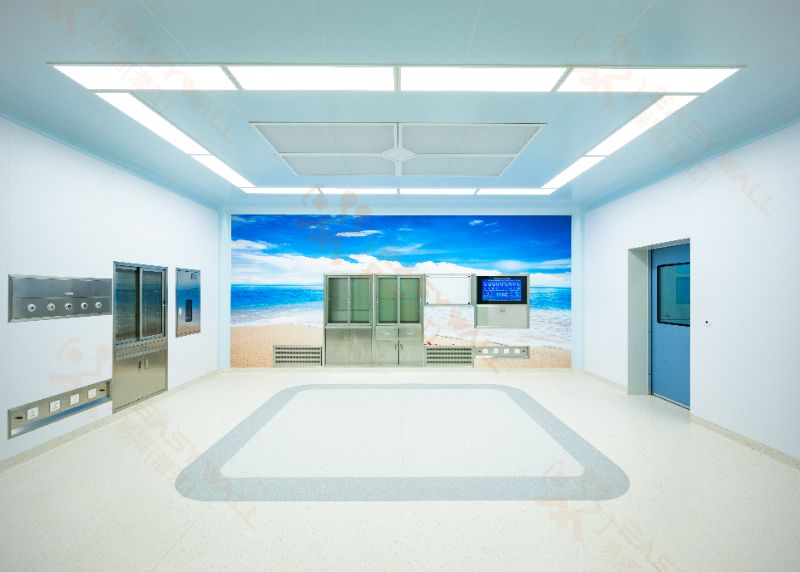
How to Choose the Right Cleanroom Panel Core Material?
 Sep. 29, 2026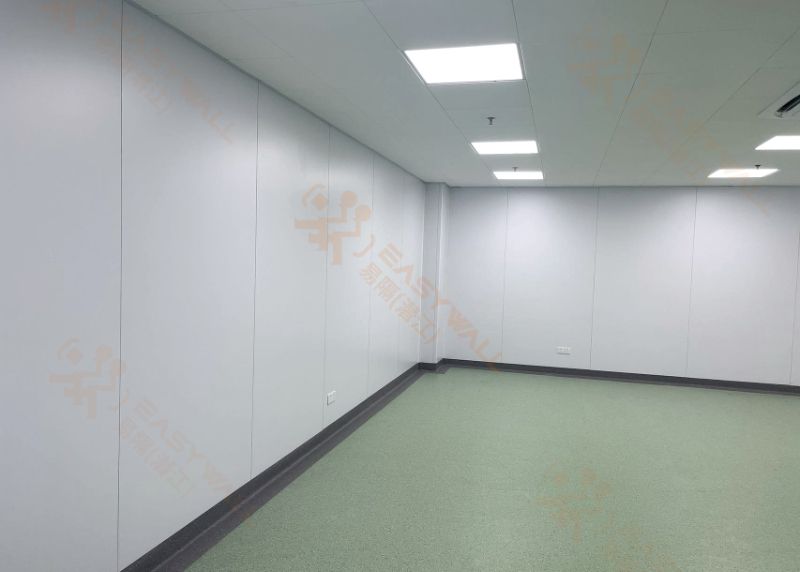
PCGI vs. Stainless Steel vs. HPL Cleanroom Panel Surface Coatings
Sep. 28, 2026 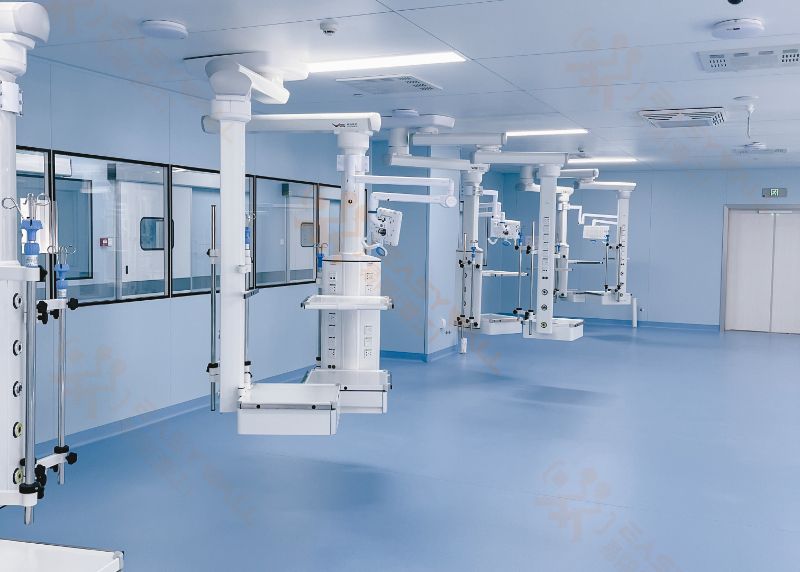
How cleanroom Panel Thickness Affects Cleanroom Performance?
Sep. 25, 2026 
How Cleanroom Panels Support Contamination Control?
Sep. 23, 2026 
VHP Sterilization: Panel Coating Resistance
Sep. 21, 2026 24 時間以内にご連絡いたします。または、毎日午前 9 時から午後 12 時までお電話ください。
+86 139 6255 5162
見積もりを依頼する
技術革新、製品の品質は企業の魂、市場の需要顧客満足度は企業の命
 English
  Chinese (Simplified)
  French
  Russian
  Portuguese