Pharmaceutical manufacturers are under pressure to expand capacity while maintaining contamination control, chemical resistance, and documented GMP compliance. A Fiberglass Cleanroom Panel can help where frequent washdown and corrosion exposure are concerns, but the best solution depends on room classification, process chemicals, fire requirements, and cleaning frequency. This guide compares the best cleanroom panels for pharmaceutical plants, pharmaceutical cleanroom wall panels, and an Anti-Corrosion Cleanroom Panel for sterile manufacturing by examining GMP cleanroom design, ISO 14644-1 classification, and sandwich panel construction. It also explains differential pressure, flush glazing, and cleanability so buyers can move from a specification to a verifiable installation.
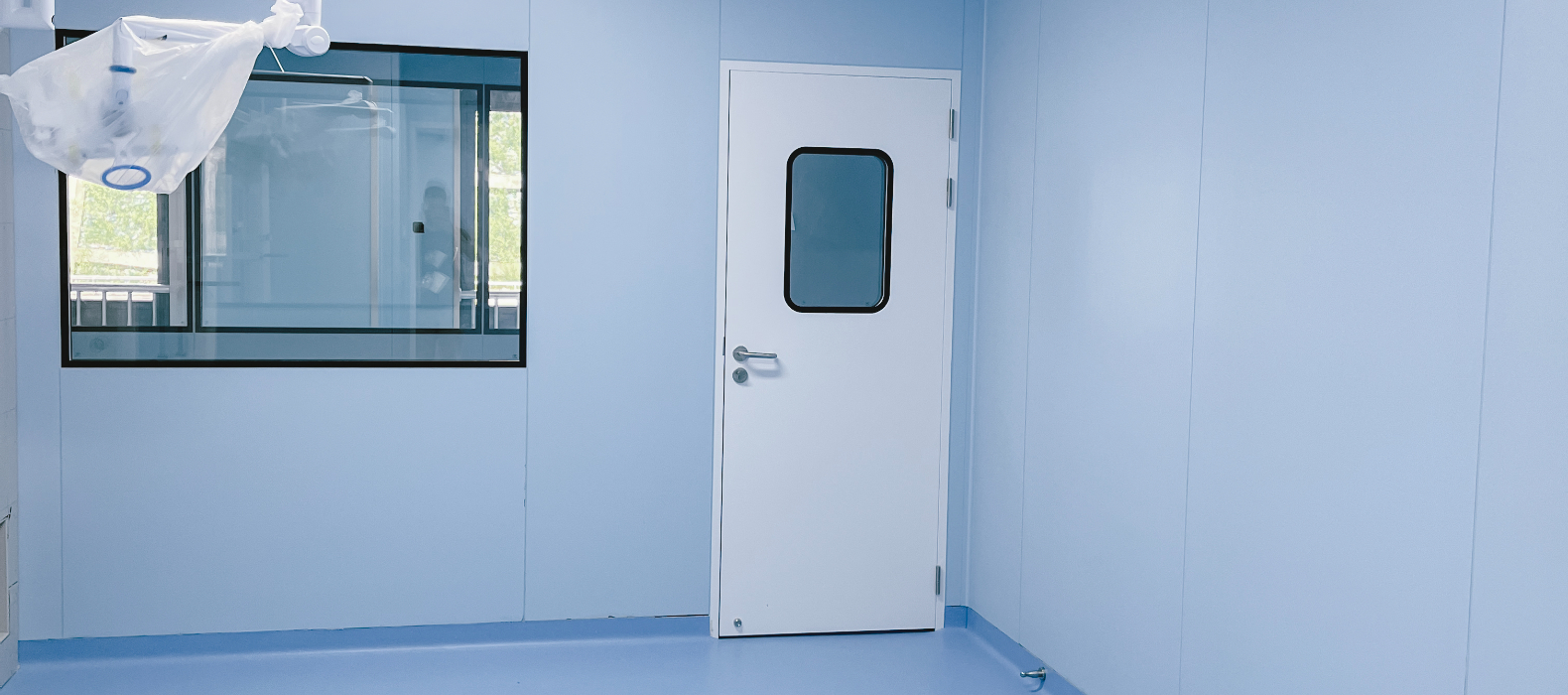
The cleanroom panel market is shifting from simple insulated partitions toward complete, validated room-envelope systems. Pharmaceutical facilities increasingly require panels that tolerate disinfectants, repeated cleaning, pressure differentials, temperature changes, and frequent maintenance access without producing particles or hidden microbial niches.
EU GMP Annex 1, which addresses the manufacture of sterile medicinal products, emphasizes contamination-control strategy, suitable premises, airflow management, and cleanable surfaces. The U.S. FDA’s Guidance for Industry: Sterile Drug Products Produced by Aseptic Processing similarly links facility design with prevention of microbial and particulate contamination. ISO 14644-1:2015 provides the framework for classifying air cleanliness by airborne particle concentration, but it does not by itself approve a wall panel or guarantee sterility.
For buyers, this means that a panel advertised as “cleanroom grade” is not enough. The specification should identify the facing material, core, joint profile, sealant, fire performance, chemical-resistance test method, surface finish, and installation tolerances. A panel may meet a particle-cleanliness requirement in a laboratory yet fail in production because of open joints, damaged coatings, poor penetrations, or incompatible disinfectants.
Ranking is application-based rather than universal. A sterile filling room, oral-solid-dose room, biologics suite, warehouse, and chemical preparation room can require different panel constructions. The correct selection is the one that meets the room’s contamination-control, fire, chemical, thermal, and maintenance requirements at the lowest whole-life cost.
Fiberglass-reinforced plastic, commonly called FRP, uses glass fibers embedded in a polymer matrix. It is attractive for areas exposed to moisture, detergents, and selected chemicals because the surface is non-porous when correctly manufactured and sealed.
Ask the supplier to test the actual surface against the disinfectants used at the site, such as hydrogen peroxide, peracetic acid, quaternary ammonium compounds, sodium hypochlorite, or alcohol-based agents. “Chemical resistant” without a concentration, exposure time, temperature, and visual acceptance criterion is not a useful engineering statement.
Easywall’s value proposition is a coordinated cleanroom envelope rather than a single decorative panel. Depending on the selected configuration, a project may include insulated wall panels, ceiling panels, flush doors, observation windows, coving, pass boxes, and service penetrations. This approach can reduce interface problems between different suppliers, but the purchaser should still require a complete technical submittal.
Recommended procurement documents for Easywall: request the product data sheet, coating specification, core density, thermal conductivity, fire test report, chemical-resistance data, joint detail, sealant technical data, warranty, installation method statement, and at least two comparable project references. This process fairly tests the system against competing suppliers instead of relying on a brand name alone.
Rockwool-core panels use mineral fiber insulation between metal facings. They are commonly selected when fire performance and acoustic control are more important than achieving the lowest panel weight.
Do not compare only the core’s fire label. Fire resistance is an assembly property. The test must correspond to the actual panel thickness, orientation, joint, support spacing, doors, windows, and service penetrations used in the project.
Polyisocyanurate, or PIR, and polyurethane, or PU, panels are lightweight insulated systems used where temperature stability and energy efficiency matter. They are often considered for cold rooms, storage areas, and rooms adjacent to temperature-controlled processes.
For a sterile manufacturing area, the thermal benefit should not override fire, cleanability, and contamination-control requirements. Request the declared thermal conductivity, aged performance where applicable, fire test data, and smoke-development classification.
Pre-painted galvanized steel or aluminum panels are widely used because they are available in many finishes and can provide a smooth, flush surface at a competitive cost. The coating system is the critical variable.
Specify the coating resin, nominal dry-film thickness, substrate preparation, salt-spray or cyclic-corrosion test where relevant, gloss level, color stability, and repair procedure. Stainless steel may be preferable in severe environments, but even stainless grades require correct welding, passivation, cleaning, and joint design.
A pharmaceutical panel should present a smooth, sealed, non-shedding surface with minimal ledges. Tongue-and-groove joints, concealed fasteners, hygienic sealants, and radiused coving can reduce residue accumulation. Flush windows and doors are preferable to projecting frames where the room classification and cleaning protocol justify them.
Cleanability is a system property. A high-quality panel can still fail operationally if the sealant cracks, the corner coving separates, or cable trays create inaccessible ledges. Include a mock-up inspection before full production and define acceptance criteria for joint width, sealant continuity, surface damage, and flushness.
Panel cores affect fire behavior, thermal resistance, acoustic performance, weight, and cost. A project specification should state the required U-value or thermal resistance, core density, thickness tolerance, fire classification, smoke performance, and reaction-to-fire test standard.
For example, a 75 mm panel and a 100 mm panel should not be treated as interchangeable simply because both are marketed for cleanrooms. The thicker panel may improve thermal resistance and structural span, while the heavier system may increase support and installation requirements. Use the manufacturer’s declared values and the relevant local code rather than generic marketing claims.
Cleanroom panels do not create a compliant room without HVAC design. Differential pressure, airflow direction, air-change strategy, terminal HEPA filtration, recovery time, temperature, and relative humidity must be designed together. In a typical pharmaceutical pressure cascade, cleaner rooms are maintained at a higher pressure than adjacent less-clean areas, although containment applications may use negative pressure.
Panel joints and penetrations must withstand the specified pressure differential without visible movement or leakage. During commissioning, the project team may perform room pressure tests, airflow visualization, HEPA filter integrity testing, non-viable particle classification, recovery testing, and microbial monitoring according to the facility’s qualification plan.
| Panel category | Indicative panel-only price | Main cost advantage | Main cost risk |
|---|---|---|---|
| Coated steel or aluminum | US$35–95/m² | Low initial material cost | Coating damage and replacement of corroded sections |
| Fiberglass/FRP | US$45–110/m² | Good wet-area durability | Resin compatibility and edge-sealing requirements |
| PIR or PU | US$45–125/m² | Thermal efficiency and low weight | Fire and smoke requirements may restrict use |
| Easywall configured system | US$50–140/m² | Coordinated components and customization | Final cost depends heavily on accessories and specification |
| Rockwool core | US$60–150/m² | Fire and acoustic performance | Weight, support, and installation labor |
These figures are planning ranges, not quotations. A complete pharmaceutical cleanroom budget should also include framing, floor and ceiling interfaces, doors, viewing windows, pass boxes, coving, sealants, electrical penetrations, HVAC, HEPA filters, controls, validation, freight, taxes, and installation. In many projects, accessories and mechanical systems account for a substantial share of the installed cost.
Public pharmaceutical case studies often report the cleanroom classification or production objective but omit the exact panel model, coating thickness, sealant chemistry, and maintenance history. Therefore, buyers should treat a photograph or short reference list as initial evidence rather than proof of compliance.
For a credible customer case, request the following from Easywall or any competing supplier:
A useful external benchmark is the regulatory framework itself. The U.S. FDA aseptic-processing guidance explains expectations for sterile facilities, while EU GMP Annex 1 addresses contamination-control principles for sterile medicinal products. The ISO 14644-1 standard page identifies the international framework for airborne-particle cleanliness classification. None of these sources endorses a specific supplier, so the panel must be judged through project-specific documentation and testing.
Start with the intended operation: sterile filling, weighing, compounding, formulation, packaging, laboratory testing, cold storage, or equipment washing. Record the required ISO classification, GMP grade where applicable, pressure relationship, temperature, humidity, and personnel/material flow.
List every cleaning and disinfection chemical, concentration, contact time, temperature, and application frequency. A panel facing that tolerates occasional alcohol wiping may not tolerate daily hypochlorite or peracetic-acid exposure. Ask for test data using the actual product or a chemically equivalent formulation.
Compare mineral wool, PIR, PU, honeycomb, and other cores against the fire strategy, thermal target, acoustic need, structural span, and local code. Require assembly-level evidence rather than relying only on the raw core material.
Identify substrate, coating chemistry, thickness, gloss, color, corrosion test method, cleanability, and repair procedure. In harsh environments, consider stainless steel or a high-performance coating, but confirm that the selected surface is compatible with the disinfectant rotation.
Most contamination and corrosion problems begin at interfaces. Review corner coving, floor-to-wall junctions, ceiling suspension, door thresholds, window frames, electrical boxes, pipe sleeves, and HVAC penetrations. Require a coordinated shop drawing before fabrication.
Ask whether the supplier supports room-integrity tests, pressure testing, particle classification, HEPA testing, and defect correction. Also confirm spare-panel availability, sealant shelf life, touch-up materials, warranty coverage, response time, and local service capability.
| Evaluation factor | Suggested weighting |
|---|---|
| Cleanability and joint integrity | 20% |
| Chemical and corrosion resistance | 20% |
| Fire and smoke performance | 20% |
| Core thermal and acoustic performance | 15% |
| Installation quality and tolerances | 10% |
| Documentation, validation support, and warranty | 10% |
| Initial purchase price | 5% |
This weighting prevents the lowest quotation from winning when it creates higher cleaning, repair, validation, and shutdown costs later.
The best cleanroom panel for a pharmaceutical plant is determined by process risk rather than by a universal “best” material. Fiberglass is often useful for wet and corrosive areas, Rockwool is strong where fire and acoustic performance dominate, PIR or PU can support thermal control, and coated metal may suit less aggressive rooms. Easywall is worth including in a competitive technical review when a buyer wants a coordinated wall, ceiling, door, window, and accessory package. Before ordering, request drawings, test reports, chemical-resistance evidence, fire documentation, installation references, and a project-specific quotation. A properly specified anti-corrosion cleanroom panel for sterile manufacturing should support GMP cleanroom operation, maintain ISO 14644-1 room performance, and preserve the integrity of the complete sandwich panel envelope. Contact Easywall through its official website for current specifications, samples, lead times, and project consultation.
They can be suitable in selected sterile-support or wet-process areas, but suitability depends on the complete system. Confirm surface cleanability, resin chemistry, joint sealing, fire performance, particle behavior, and compatibility with the site’s disinfectants. A panel should not be approved solely because it is labeled FRP or fiberglass.
There is no universal answer. High-performance coated metal, fiberglass, stainless steel, and selected laminate systems may be suitable, but compatibility depends on hydrogen peroxide concentration, vapor or liquid exposure, temperature, contact time, and frequency. Obtain test evidence for the exact facing and sealant combination.
Common wall thicknesses may range from approximately 50 to 150 mm, but the correct value depends on span, structural support, thermal performance, fire rating, acoustic requirements, and service integration. Many production-room specifications use 75 or 100 mm systems, but this is not a regulatory universal.
No. ISO 14644-1 classification is based on airborne particle concentration measured under defined conditions. Panels support room integrity and cleanability, but HVAC design, filtration, airflow, personnel practices, cleaning, gowning, and operational control determine whether the room achieves its required classification.
Use the same performance schedule for every supplier. Compare panel construction, facing and coating, core, fire test, chemical-resistance evidence, joint design, accessories, warranty, lead time, installation method, validation support, and references. Request written deviations so that differences are visible in the bid comparison.
A robust submittal normally includes product data sheets, shop drawings, material certificates, coating information, fire and smoke reports, chemical-resistance data, sealant technical data, structural calculations where required, installation instructions, cleaning recommendations, warranty terms, maintenance instructions, and a list of approved accessories.
Service life depends on coating quality, cleaning chemistry, impact, humidity, temperature, joint maintenance, and installation quality. Rather than accepting an unsupported year claim, ask for warranty duration, expected maintenance intervals, coating-repair procedures, and references from facilities that have operated for several years under comparable conditions.
最新ニュース
How to Choose the Right Cleanroom Panel Core Material?
 Sep. 29, 2026
PCGI vs. Stainless Steel vs. HPL Cleanroom Panel Surface Coatings
Sep. 28, 2026 
How cleanroom Panel Thickness Affects Cleanroom Performance?
Sep. 25, 2026 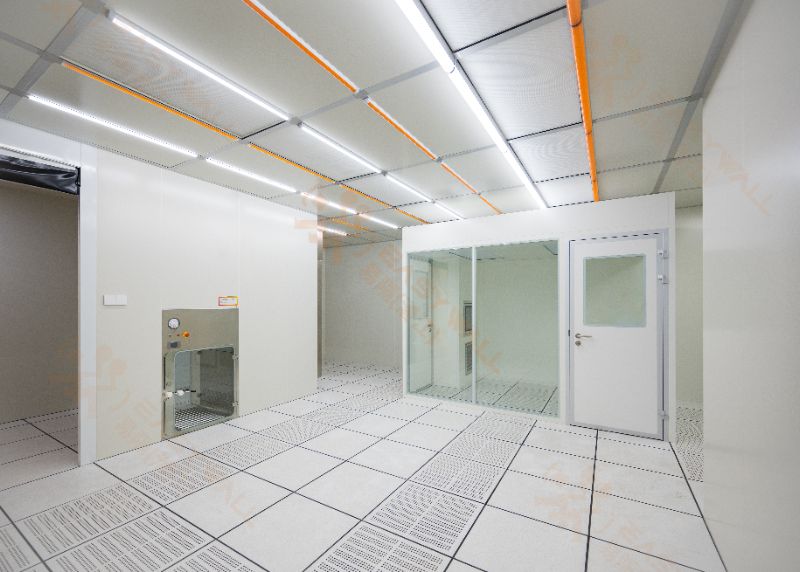
How Cleanroom Panels Support Contamination Control?
Sep. 23, 2026 
VHP Sterilization: Panel Coating Resistance
Sep. 21, 2026 24 時間以内にご連絡いたします。または、毎日午前 9 時から午後 12 時までお電話ください。
+86 139 6255 5162
見積もりを依頼する
技術革新、製品の品質は企業の魂、市場の需要顧客満足度は企業の命
 English
  Chinese (Simplified)
  French
  Russian
  Portuguese